
Uneven Heat
Compare rooms, zones, and emitters to identify whether the symptom is local or system-wide.
Areas We Serve · Medford, MA
Local service-request information for West Medford, with an editorial focus on radiator and baseboard distribution, room-by-room comfort, and circulation troubleshooting.
Service-request coverage: ZIP codes 02155 and 02153.
Local Service Focus
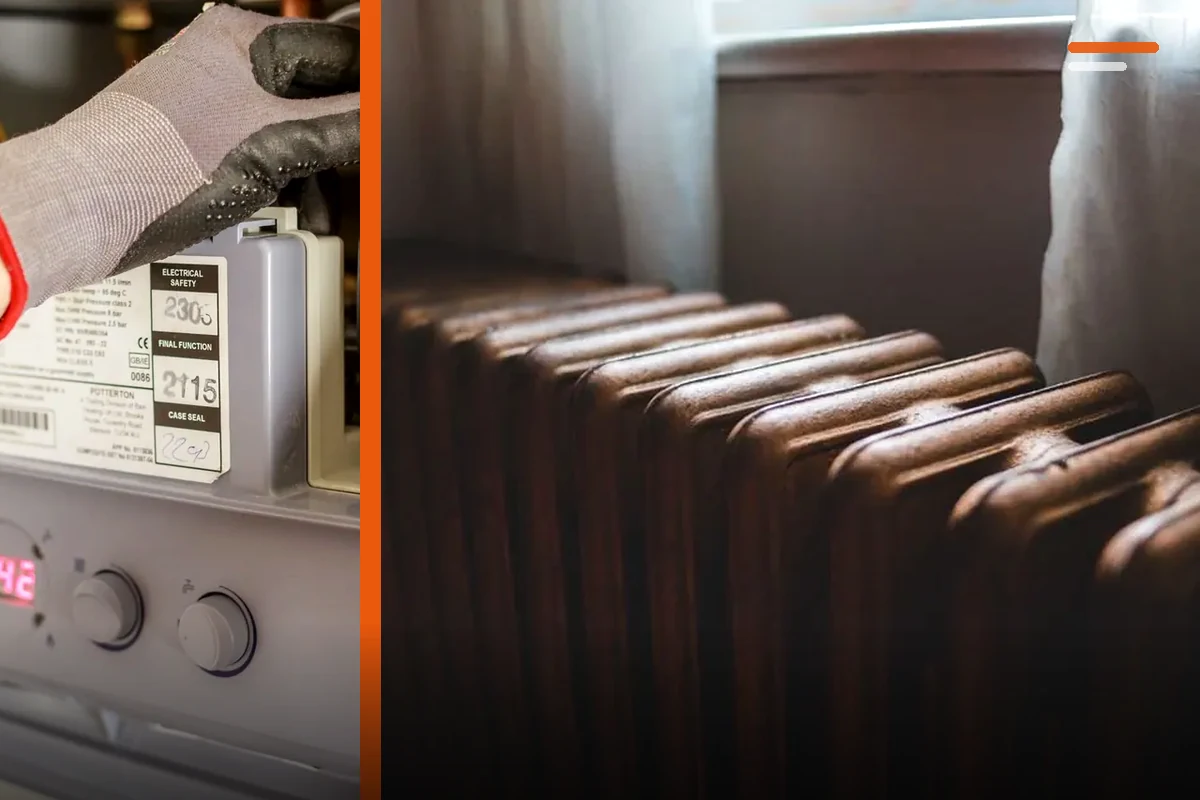
When a West Medford service request starts with “some rooms are cold,” the most useful first step is to separate boiler production from heat distribution. A boiler can make hot water correctly while a zone valve, circulator, trapped air pocket, or balancing issue prevents heat from reaching a particular room.
Homeowners can help by noting which emitters heat normally, whether the affected rooms share a thermostat or zone, and whether the symptom changed after recent service. Those observations give a professional a better starting point without requiring the homeowner to open the boiler or adjust safety controls.
For radiator and baseboard complaints, supply-and-return temperature patterns can be more informative than simply touching one pipe. A professional may compare loops, look for air or flow restrictions, and decide whether the fault is local to an emitter or part of the broader hydronic system.
This page does not claim neighborhood-specific boiler statistics, equipment prevalence, or completed-job history. Its local value comes from organizing a practical service-request path for a Medford area while keeping the technical guidance specific to the symptom focus above.
Coverage references are intentionally limited to 02155 and 02153. A request can be submitted from the covered Medford area, but provider availability, credentials, pricing, and timing are determined by the independent provider.
Compare rooms, zones, and emitters to identify whether the symptom is local or system-wide.
Gurgling, partial heat, or temperature differences may justify circulation and air checks.
Thermostat calls, valves, relays, and pumps can affect heat delivery independently of boiler output.
Radiator and baseboard distribution, room-by-room comfort, and circulation troubleshooting.
That focus is an editorial strategy, not a claim that these problems occur more often in this neighborhood.
Read the related service page →The professional confirms what is happening, when it occurs, and which parts of the building are affected.
Testing follows the heating-system type, control sequence, pressure behavior, and distribution layout rather than a generic checklist.
You should receive an explanation of the likely cause and any reasonable repair, maintenance, or follow-up choices before work proceeds.
Do not bypass safety controls or cap a relief discharge. If you smell gas, suspect combustion fumes, or a carbon-monoxide alarm activates, leave the area and follow emergency utility or emergency-service guidance before arranging routine boiler work.
For hydronic systems, periodic attention to pressure stability, circulation, visible leakage, and unusual noises can help identify developing problems. For steam systems, waterline behavior, venting, pressure control, and condensate return deserve system-specific attention.
Maintenance decisions should be based on the actual boiler and distribution system. Flushing is not automatically appropriate for every property; water quality, debris, materials, and manufacturer guidance matter.
Keep service records and note recurring symptoms. A history of which zones were affected, what the pressure gauge showed, or when a lockout occurred can make later diagnosis more efficient.
No heat, shutdowns, active leaks, and urgent safety-related symptoms.
Emergency repair guidance →Pressure loss, overpressure, relief discharge, and leak tracing.
Leak and pressure service →Inspection, circulation, water-quality, and cleaning decisions.
Maintenance guidance →Service requests are accepted for Medford coverage in ZIP codes 02155 and 02153. Availability depends on an independent provider accepting the request.
Describe the symptom, which rooms or zones are affected, any safe gauge reading or error display, and whether the issue is constant or intermittent. For this page, the diagnostic emphasis is radiator and baseboard distribution, room-by-room comfort, and circulation troubleshooting.
West Medford · South Medford · North Medford / Fulton Heights · Medford Square / Center
For this area page, the strongest independent value is a room-by-room distribution perspective. A service request should identify whether the boiler itself is producing heat and then follow that heat through zones, pumps, valves, piping, radiators, or baseboards. That framing prevents every cold-room complaint from being treated as a boiler failure.
When one room is cold and adjacent rooms are comfortable, note whether the emitters share the same loop. A professional may compare inlet and outlet temperatures, valve position, and signs of trapped air or restricted flow. If an entire floor or thermostat zone is cold, the control path and zone-circulation equipment deserve more attention.
Baseboard systems need unobstructed airflow to release heat. Furniture, covers, dust, or damaged fins can reduce room output without changing boiler operation. A useful evaluation separates those emitter-side limitations from low water temperature, weak circulation, or a control that is not opening the zone.
Hydronic radiator noise can also be a distribution clue. Gurgling can suggest air, but recurring air may point toward pressure or system-fill conditions. A one-time bleed that temporarily improves a radiator is useful information, yet repeated air entry deserves diagnosis rather than endless bleeding.
If the property uses steam, the method changes. Steam radiator vents, condensate return, pressure, and piping behavior are not diagnosed like a pumped hot-water loop. Tell the provider whether the radiators have steam vents, whether noise occurs before or after they heat, and whether the boiler waterline changes unusually.
After a distribution repair, evaluate more than the previously cold emitter. The professional may confirm thermostat response, zone shutoff, pump operation, and the temperature balance across the loop. A stable result over a normal cycle is stronger evidence than touching one hot pipe immediately after a repair.
For a West Medford comfort complaint, make a simple room list and mark each space warm, cool, or unchanged. Include which thermostat serves the area and whether the symptom appears only during very cold weather or during every heat call. This creates a practical distribution map without assuming anything about local housing stock.
If one radiator or baseboard has been manually closed, moved, covered, or recently worked on, mention that history. A change in emitter condition can be just as relevant as a boiler fault when the complaint is limited to one space. The provider can then compare that branch with normally heating areas.
For follow-up, keep the room map for several heating cycles and note whether the same emitter falls behind again. A repeatable pattern can help separate a temporary air condition from a control, flow, or balancing issue that deserves another targeted check.
Share the symptoms you are seeing so the service request can be matched appropriately.